Static and dynamic stretching: how they differ
Two approaches to stretching side by side: pace, time of day, space needed, a comparison table, a sample eight-minute session and how to pick the option for you.
People often talk about stretching as one thing, although the word covers different approaches. The two most common are called static and dynamic stretching. They differ in pace, and each is convenient at its own time of day.
Static stretching
You move into a pose, stop at the point of a gentle pull and stay there for 20–60 seconds. There is almost no movement, and your attention is on your breathing.
- Suits the evening and the end of a workout.
- Easy to do at home without much preparation.
- Takes patience, because the first seconds in a pose are usually the least comfortable.
Dynamic stretching
Here you smoothly repeat a movement through its full comfortable range: leg swings, arm circles, lunges with a torso twist. The pace is calm, without jerking, with 8–12 repetitions of each move.
- Suits the morning and a warm-up before activity.
- Warms the body through movement, so it's convenient to do first.
- Needs a little more free space around you.
Comparison
| Feature | Static | Dynamic |
|---|---|---|
| Pace | Still, 20–60 seconds | Repetitions, 8–12 times |
| When | Evening, after exercise | Morning, before exercise |
| Space | A mat | Free space around you |
| Focus | Slow breathing | Smooth rhythm of movement |
How to combine them
Many people use both approaches in one day: a few minutes of dynamic moves in the morning, slow static poses in the evening. Within one session you can also start with dynamic moves and finish with static ones.
Sample 8-minute session
- Shoulder and arm circles, 1 minute.
- Moving side bends, 1 minute.
- Lunges with a torso twist, 2 minutes.
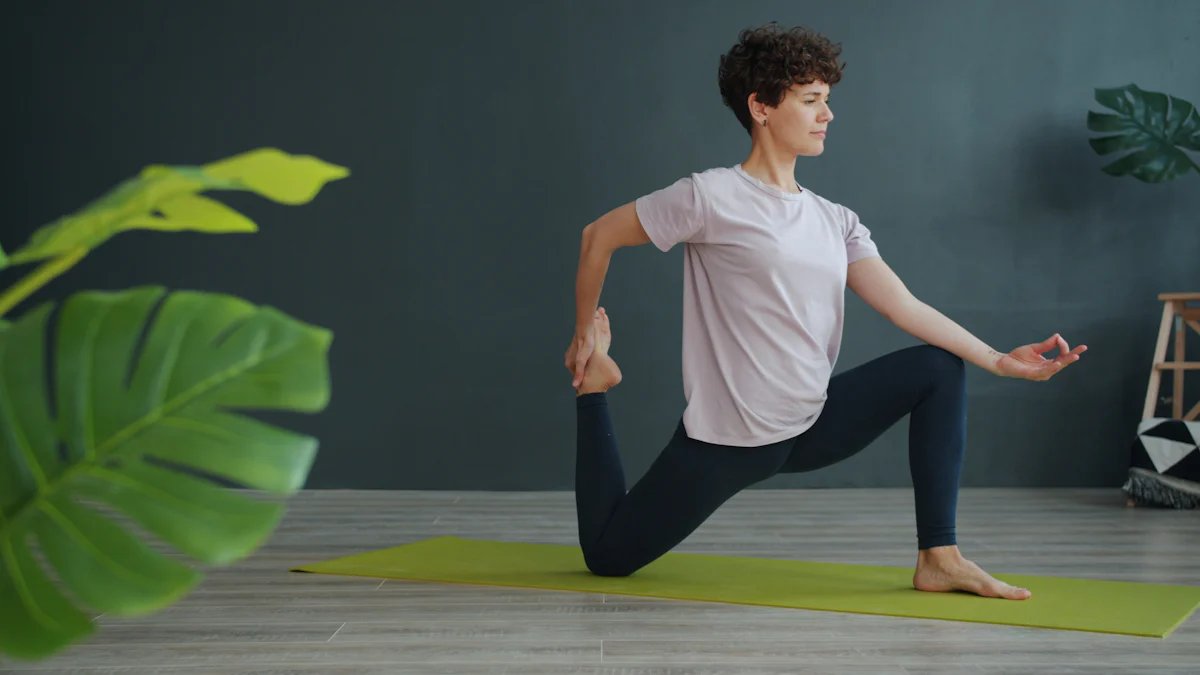
- Kneeling lunge, 1 minute on each leg.
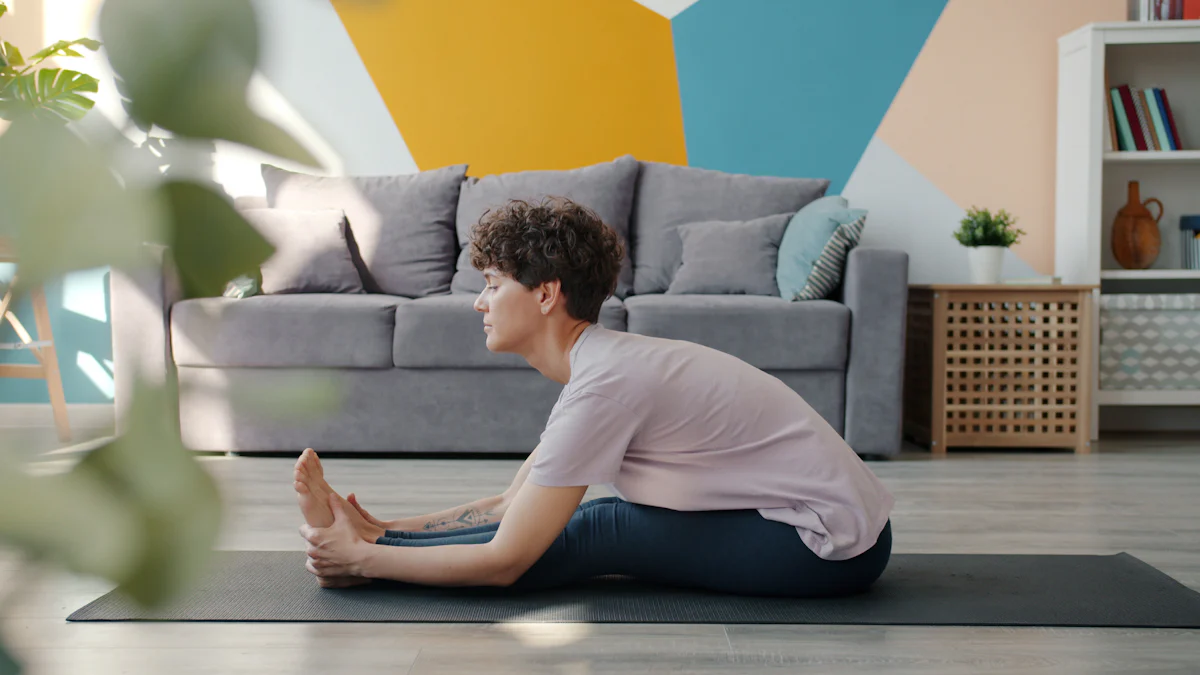
- Seated forward fold, 2 minutes.
About ballistic stretching
There is also a third option: sharp, bouncing movements at the end of the range. It usually isn't recommended for home practice without a coach, because jerks are hard to control.
The same goes for swings that are too fast in dynamic stretching. If a movement starts running on momentum and you stop controlling it, slow down or reduce the range.
Whichever approach you choose, move within your comfort. If you have an injury or chronic problem, talk to a doctor or physiotherapist first.
How to choose for yourself
Start by asking when you'll practise. If stretching falls in the morning or before a walk, the dynamic kind fits better. If it's in the evening before bed, static poses with a long exhale are more convenient.
The second question is about space. Leg swings and lunges need free space around you, while static poses can be done on a narrow mat between the bed and the wardrobe.
If you're not sure, try each approach for a week and note which was easier to keep up. Your own convenience counts for more here than any general scheme.
Where to go next
In stretching apps such as Bend, routines are often labelled by time of day, so you can quickly find both a dynamic morning set and a slow evening one. Read more about short daily sessions in our blog.