Stretching at home: a checklist for space, things and time
What to prepare before your first session at home: how much space you need, which things are essential, how to choose a time and plan, and which mistakes to avoid at the start.
You don't need a separate room or expensive equipment to stretch at home. Even so, a few small things decide whether it will be comfortable and whether you'll want to get back on the mat tomorrow. You can work through this checklist in one evening.
Space
- A patch of floor about 2 by 1 metres, so you can lie down and stretch out your arms.
- Nothing sharp or fragile within arm's reach.
- A warm floor, or a blanket underfoot if the room is cold.
- If possible, the same spot every day, so you don't have to find it and clear it each time.
Things
Essential
- A mat or a blanket folded in half.
- Comfortable clothes that don't pinch in bends and twists.
Useful but optional
- A pillow or bolster for under your knees and hips.
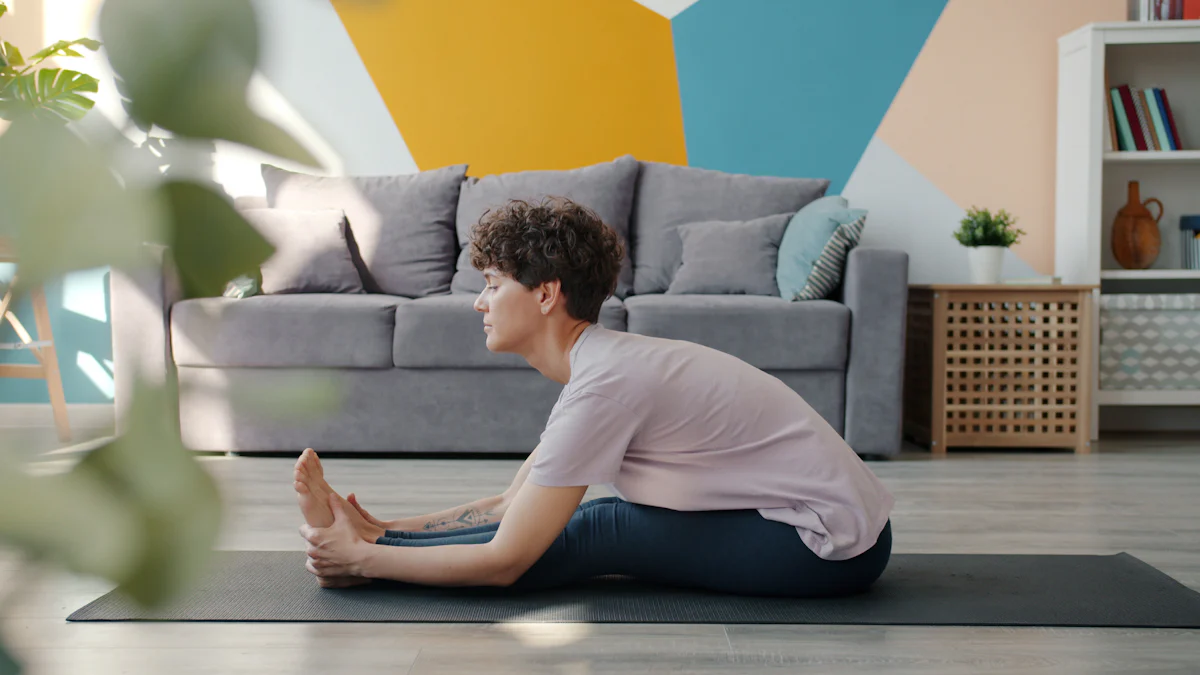
- A strap or towel to reach your foot in a forward fold.
- A couple of firm books instead of yoga blocks.
- A timer, so you don't have to watch the clock.
There's no need to buy everything at once. Practise for a week with what you have at home, and then you'll see what is really missing.
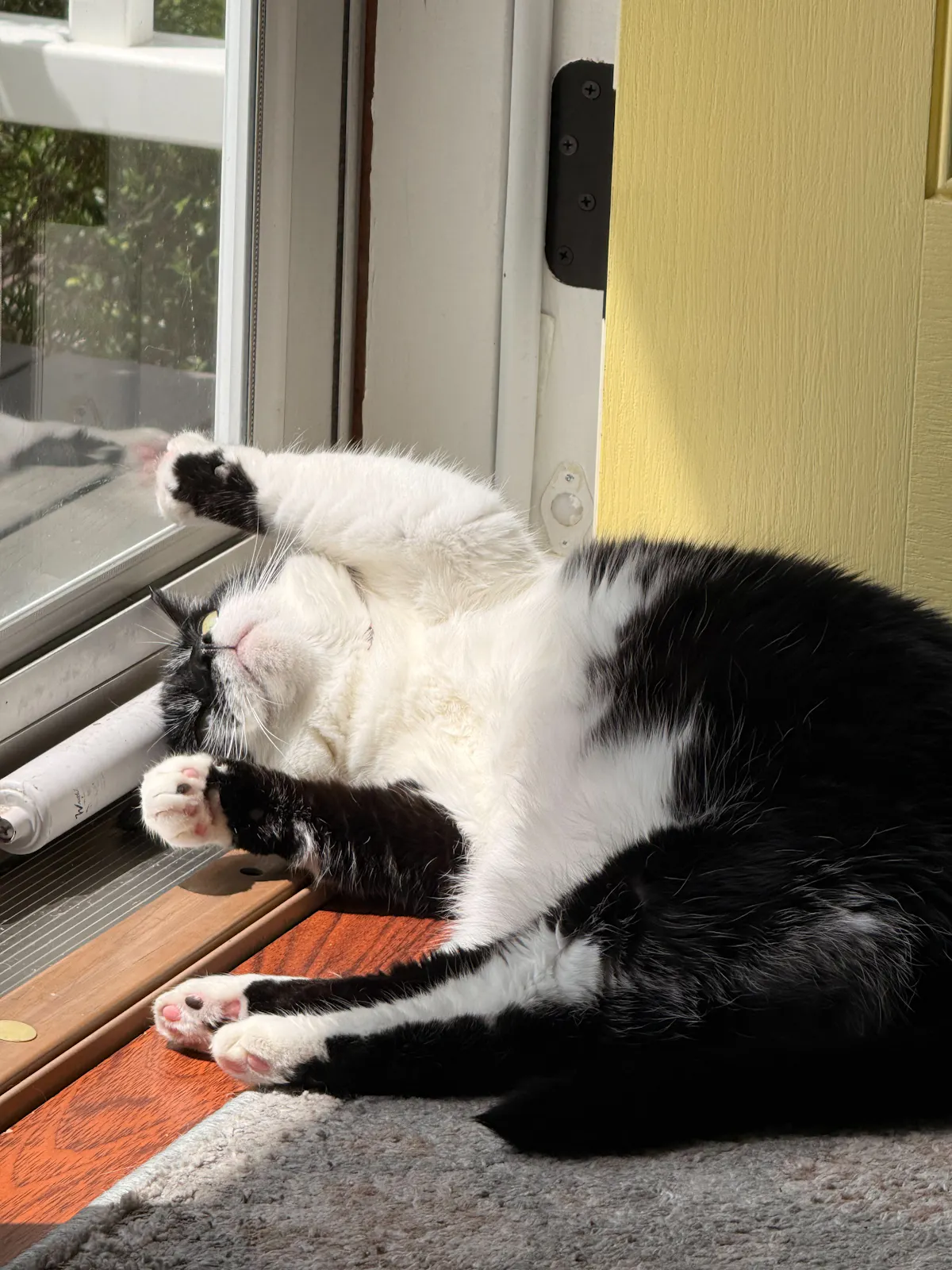
If you have children or pets at home, take them into account too. A cat will often treat a rolled-out mat as its own spot, and it's better to be ready for that ahead of time than to get annoyed halfway through a pose.
Time
Choose one slot in the day and write it down. The morning before breakfast, a lunch break or the evening before bed all work equally well as long as the time repeats. Start with 5–10 minutes and increase only once the short version has become routine.
Plan
Decide in advance what you'll do, so you don't lose minutes choosing. The simplest option is to rotate body areas by day. For example, neck and shoulders on Monday, back on Tuesday, hips on Wednesday and so on, with one free day at the end of the week.
Safety
- Start with a light warm-up.
- Don't jerk at the end of a movement.
- Pain, numbness or dizziness mean you should stop.
- If you have an injury or chronic problem or are pregnant, talk to a doctor or physiotherapist first.
Check before your first session
- The space is chosen and clear.
- The mat or blanket is close by.
- The time is in your calendar or a reminder is set.
- You have a list of three to five moves for the first day.
Common mistakes at the start
- Buying a lot of things at once and hardly using them.
- Scheduling 30–40 minute sessions from day one.
- Practising at different times and choosing what's convenient each time.
- Comparing yourself with photos on social media.
Each of these habits makes the start harder. A short session at a fixed time, with what you already have at home, is easier to keep up. If you don't live alone, let the people around you know your time, so nobody pulls you away for those few minutes.
Where to go next
If you'd rather not put a plan together yourself, the Bend app has ready-made routines and a timer. You can see a sample week that rotates body areas on the home page, and other articles in our blog.